 Language
 Language
Artz Master Cabinet Sdn.Bhd.
Add: Lot 11936, Jalan Perajurit 1, Telok Gong, 42000 Port Klang, Selangor Darul Ehsan, Malaysia.
Email: sam@artzmaster.com
Why Choose Us?
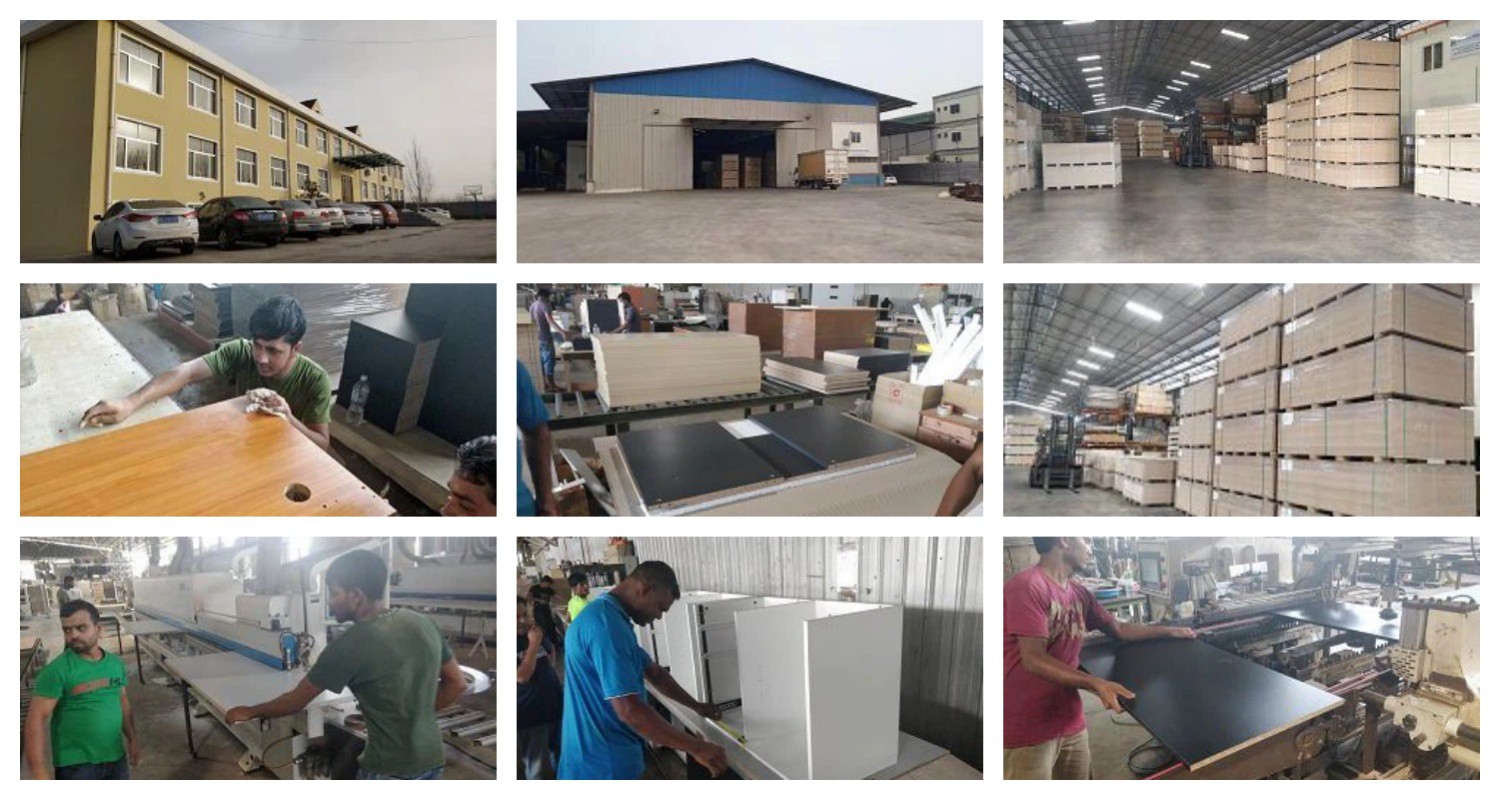
Artz Master Sdn. Bhd. is a professional manufacturer and supplier of kitchen cabinets. We have 2 factories, namely a veneer lamination factory and a mechanical processing factory, which are located in Malaysia with a total area of 200,000 square feet. Our professional team consists of 120 employees with many years of experience in cabinet product export as well as hot melt melamine pressing equipment, which can provide our customers with mass customization without being limited by the size of the project.
Well Equipped
Our factory is equipped with complete production equipment, including CNC punching, heavy-duty automatic edge banding lines and various design software, and can independently complete processes such as product modeling, machine interconnection, communication and product manufacturing.
Quality Guaranteed
We provide boards with seamless edge sealing to improve product standards. All products have passed ISO and JIS certification and obtained CARB P2 certificate to ensure that the materials are environmentally friendly.
Wide Range of Products
We have a wide range of products such as flat panel based furniture including kitchen cabinets, bathroom vanities, wardrobes, office furniture, living room furniture, etc.
Good Reputation
Most of our products are exported to the United States, Canada, Australia and Europe and have won high praise from customers because of their excellent quality.
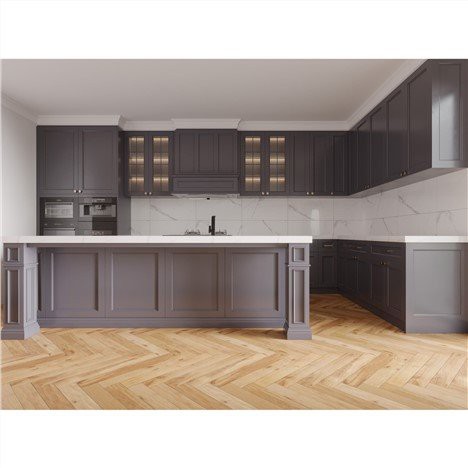
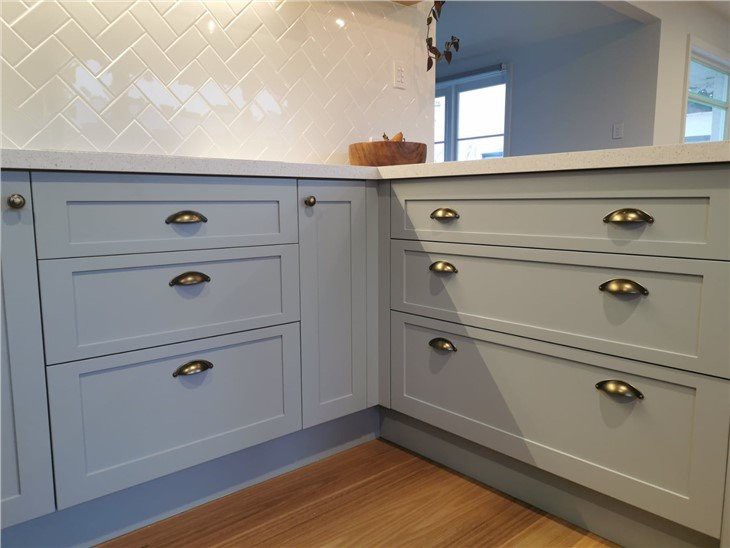
Framed cabinets are cabinets that have a visible or concealed frame that supports the cabinet structure. The frame adds strength and durability to the cabinet. Framed cabinets are also known as "face frame" or "American style cabinets". They are attached to each other through the width of the face frame. This allows the screws to anchor more deeply into the attachment points of the adjacent cabinet. Framed cabinets can accommodate a longer screw length (usually 2-1/2") due to the width of the face frame and the solid wood material.
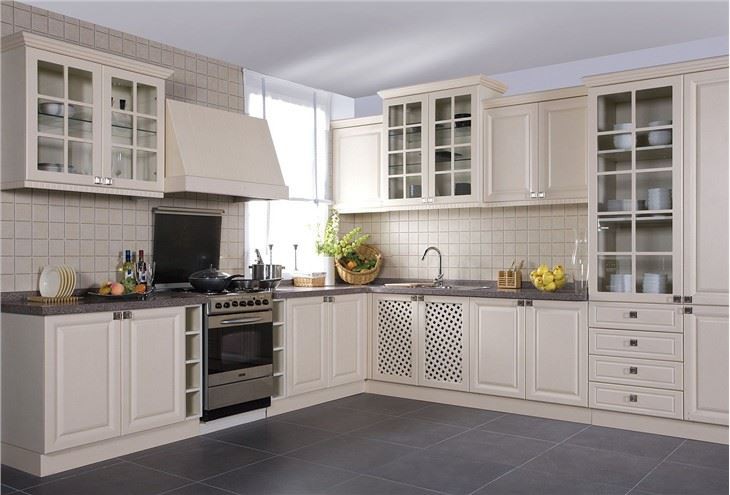
Features of Framed Cabinet
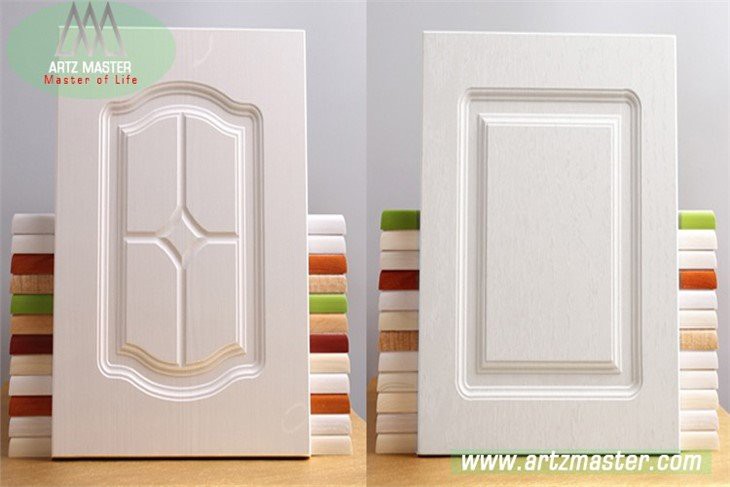
Durable Material
Our frame cabinets are made of high-quality particle board, solid wood materials and metal frames, which can bear the weight of a large number of tableware,do not need to be replaced in a short period of time.
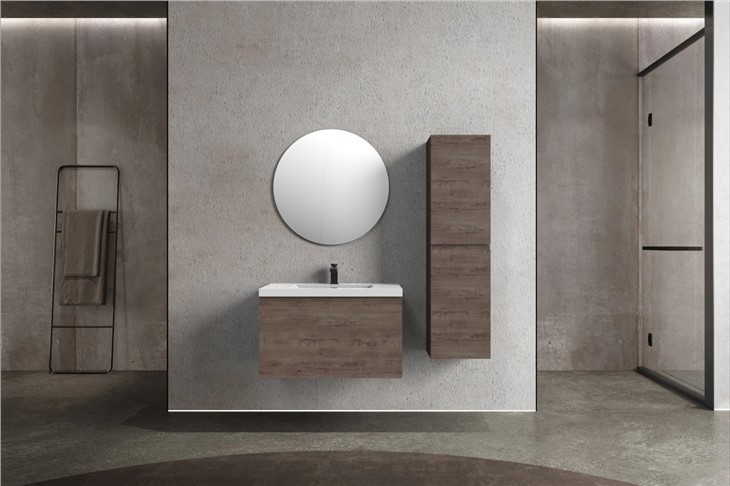
User-Friendly
The cabinets feature magnetic locks and rubber bumpers for a quiet, tight closure. Even if the floor is slightly uneven, the cabinet leg levelers on the bottom keep it perfectly stable.
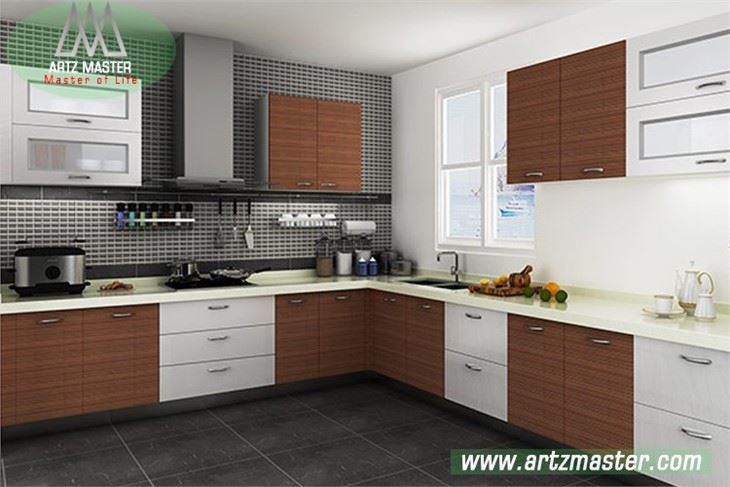
Large Capacity
The spacious tabletop inside can place items such as coffee machines, photo frames, succulents, etc. And its interior dividers are perfect for storing kitchen equipment you don't want to display on the counter, including coffee mugs, air fryers, and more.
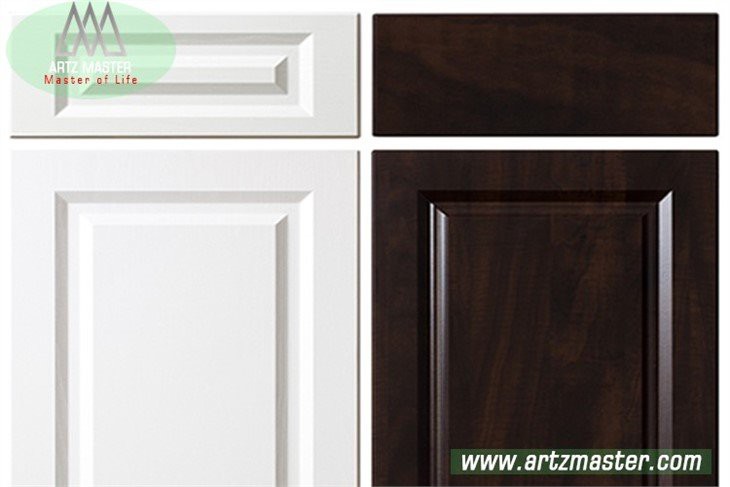
Easy to Assemble
This cabinet comes with easy-to-follow instructions and can be assembled in just 30 minutes as long as the installer follows the instructions.
Kitchen cabinet materials range wide, as each reflects a different scale of quality, durability, appearance, and price. Certain materials are also more applicable to different parts of a cabinet than others, which is why a baseline understanding of cabinet construction will improve your chances of selecting the best cabinet material for your needs.
The cabinet box is where items are stored within the cabinet and what the frame attaches to.
Cabinet door overlay styles include:
The cabinet frame is attached to the front of the cabinet box. It’s what the doors often attach to in a framed cabinet box.
Framed cabinets have extra pieces of wood overlayed and “framing” the opening of the cabinet box. Frameless cabinets (also called European style cabinets) opt for no frame or extra wood on the cabinet box for a cleaner, sleeker design. Because of this, frameless cabinets require stronger, thicker base material to hold up to storage and use.
Kitchen cabinet panels are affixed to the exposed sides of cabinets, islands, and appliances to cover the exposed, unfinished sides of a cabinet box. Panels are available in decorative end panels, refrigerator end panels, dishwasher panels, and more. Designed to “finish” unfinished cabinets, panels ensure a consistent look throughout your cabinets.
Contrast between Framed Vs Frameless Cabinets
Cabinets are the backbone of the kitchen (though you might also say it's the face but hey we could argue body parts all day long). Although there are many decisions to be made, such as material, wood species, finishes, door styles, embellishments, and so on, the truth is more options mean the more customized your cabinets can be to your specific taste and needs.
Framed Cabinetry
It is the traditional way American cabinet manufacturers have built cabinets and what you will find in a typical kitchen today. As the word suggests, the face of framed cabinets have a 1-1/2 inch frame resembling a flat picture frame. The door is then attached to the frame which adds dimension to the door front.framedThe main advantage to this construction is that it gives the cabinets more strength and sturdiness since the doors are secured to the frame. Framed cabinets are also more flexible since they have more design possibilities for creating a customized look. You can create a uniform, flush-mounted look by mounting the doors inside the frame (full overlay) or get a little risk-ay and reveal part of the frame by mounting the doors to the front of the frame (partial overlay). Since some frames can be cut from one solid piece of wood, the different arrangements of drawers and doors are limitless.
Frameless Cabinets
A more contemporary cabinet design, they are the European way of manufacturing cabinets that has become increasing popular in the American kitchen. The concept is simple - the face frame is eliminated and just the box remains. The doors are attached directly to the sides of the cabinet box for a clean, modern look. Without the frame, frameless cabinets rely on a thicker box for strength and stability. Since the doors can only be mounted to the sides of the box and cover the entire cavity, only full-overlay doors can be used. The cabinets and drawers are comparatively larger than framed cabinetry in order to cover more area. Frameless cabinets are typically called "full access" because they allow more accessibility by eliminating not only the frame but the center stiles between two cabinet doors as well.
●Advantages of Frameless Cabinets
(1)Frameless cabinetry is sometimes called “full access” because without the face frame, more interior space is available. You get a larger opening to store dishes and cookware.
(2)It’s easier to adjust shelves in frameless cabinets since there is no face frame to work around.
(3)Flush exterior sides are standard on every frameless cabinet, while they are an upgrade on framed cabinets. Frameless cabinets provide a contemporary, smooth look because the edges of doors and drawers come up against each other nearly flush (in cabinet terms, they “butt”).
(4)The Full Overlay of a frameless cabinet completely covers the entire box, leaving only a 2mm reveal that creates a seamless appearance.
(5)Frameless construction allows for great flexibility in design and styling. A frameless cabinet can be used in a Traditional, Transitional, Modern or Contemporary design.
(6)Since there’s no frame around the cabinet openings, the doors of a frameless cabinet can be omitted completely to provide open shelf storage.
(7)Doors can easily be removed for cleaning without using tools. All you have to do is push the quick release button on the back of the door hinge.
(8)Frameless cabinets don’t have a center stile coming down the middle of the two cabinet doors. Without the center stile, access to the items inside is easier, as well as more storage space. (In fairness to framed cabinets, cabinets less than 36” wide don’t get a center stile, either.)
●Disadvantages of Frameless Cabinets
Framed cabinets are typically easier to install than frameless cabinets. So, if you decide to install your kitchen cabinet or bathroom cabinet yourself, you may save a bit of time and effort. And if you hire a professional cabinet installer, you may have more confidence and peace of mind.
Perhaps the most significant benefit of framed cabinets is increased durability. Because of the frame that each of these cabinets is equipped with, they tend to be quite a bit more stable and sturdier. This can make their structures significantly less likely to become seriously damaged.
Another great benefit of framed cabinets is that they’re very versatile pieces of furniture. For one thing, framed cabinets are available in several different materials, including wood, particle board, laminate, and MDF (medium-density fiberboard). Additionally, framed cabinets typically give you more options than frameless cabinets in terms of sizes and modifications. So, if you’re looking for a cabinet that will fit your unique bathroom or kitchen design, going with a framed cabinet will make the customization a bit easier.
Framed cabinets compared to its frameless varieties are more flexible in terms of customization options. There are a couple of framed cabinet door varieties that you can try and see which one is the best fit for your kitchen. First is a full overlay, where the doors are mounted inside the frame to provide a flush-mounted and uniform look. Another is a partial overlay that can be a bit sturdy as parts of the frame are exposed by mounting the doors to the front of the frame.
Due to the larger size of the frames, it enables you to about two cupboards that can give off a pretty seamless look. With this benefit in mind, it opens the opportunity for you to invest in more eye-catching kitchen remodeling services and accessories such as the countertops, backsplashes, sink, etc.
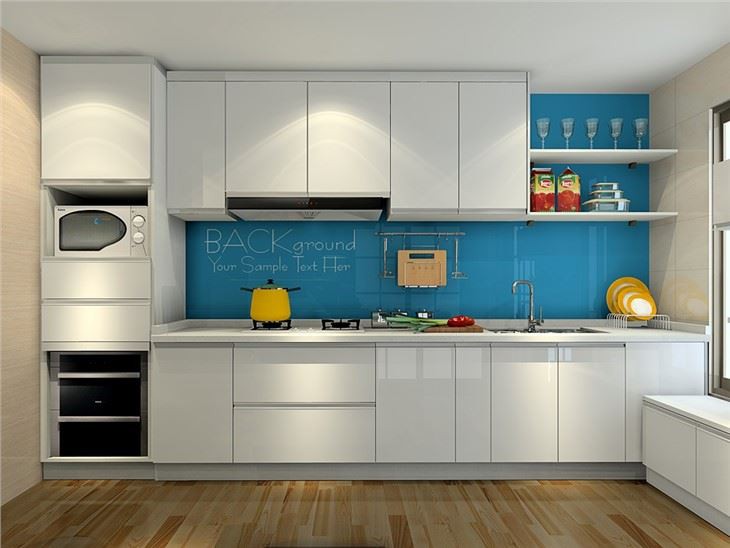
Square Framing Bead
The Square Framing Bead is the simplest form of a Face Frame as it utilizes square edges. This type of Face Frame is made up of square stock to create Vertical Stiles and Horizontal Rails. They are joined together several different ways but the most common is by way of Mortise and Tenon or Pocket Screws. Once assembled, the frame is glued onto the face of the cabinet.
The most common Door Styles associated with this type of construction are either Plain Inset (square door sitting inside of a square frame) or Lipped (door is rabbeted to partially overlay the face frame so that it protrudes out of the opening).
Decorative Framing Bead
The Decorative Framing bead is a more elaborate style of Face Frame and utilizes a profile around the opening. The profile can either be an applied molding that is mitered or it can be part of the Frame and haunched where the Stiles and Rails come together.
The shape and size of the decorative framing bead can vary greatly and may can range from a simple bead to an elaborate shape. It really comes down to the imagination of the designer. Typically when a Decorative Framing Bead is used, the door will be Inset. This allows the door to sit inside the frame to showcase the profile.
Much like a Square Framing Bead, this style of Face Frame is typically assembled with Mortise and Tenon Joinery or by way of Pocket Screws. The completed frame is then glued to the face of the cabinet.
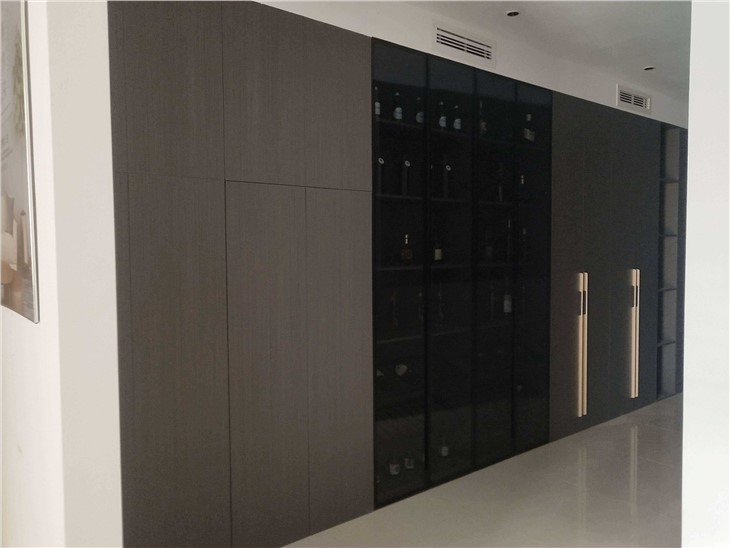
Many cabinets might include a compilation of materials in their overall structure. However, the materials may be used for different cabinet parts. Below are the most common cabinet materials you’ll find on the market and what they are most often used for.
Solid Wood
Solid wood is one of the most popular materials for kitchen cabinets for its natural beauty, strength, durability, longevity, and versatility for different styles—though that does make it a premium cabinet material. Since no two pieces of wood are alike, neither are wood cabinets. From color, grain, pattern, and texture, wood cabinets have a wide range of looks and styles they can match.
Wood Veneers
A wood veneer is a thin strip of solid hardwood peeled or cut from a log. Wood veneers are then attached to plywood, medium density fiberwood (MDF), or particle board to create wood-like panels. They are thin, lightweight, and a way to achieve the wood look without the cost of solid wood cabinet doors. Consider wood veneers a finish to present a beautiful wood face for your cabinetry.
Plywood
One of the most common materials in cabinet construction is plywood, which is built up of layers of thinly sliced wood slabs (known as flitches), layered in opposing directions and bonded together with adhesive. It’s much more durable than particle board. Plywood is often covered with a decorative wood veneer to give the appearance of wood for cabinet boxes.
It’s the strongest of the engineered wood options, making it the best choice for cabinet boxes, drawer floors, shelves, and frames.
High-density Fiberboard (HDF)
An engineered wood variant made with wood fibers mixed with resins and glue, high-density fiberboard (also called hardboard) provides the hardness and appearance of wood cabinets but without the price tag. It’s denser than solid wood, though less expensive than both hardwood and plywood.
Medium-density Fiberboard (MDF)
Another engineered product, medium-density fiberboard is less dense than HDF since it is made with less pressure. It is often used as a substrate for cabinet surface layers like veneer and laminate. MDF is also used as an inner layer for engineered wood cabinets. It works best for cabinet panels, drawers, and shelves.
Thermofoil
Thermofoil cabinets are constructed with a foil-like material vacuum sealed with heat over MDF. High gloss thermofoil in particular creates a shiny and reflective surface that makes your kitchen look bigger and brighter.
Laminate
Laminate is a resin combined with a paper featuring the desired design, color, or pattern, pressed together with heat. It’s a surface material that affixes to plywood or other fiberboard on the cabinet body.
The quality of the laminate will affect its price, strength, and tendency to peel from the core component. High-pressure laminate (HPL) will crack and chip less than the low-pressure laminate (LPL).
PET laminate in particular features a thermoplastic polymer laminated to substrate, like MDF, that has a stronger heat seal with special adhesive and a beautiful transparent, reflective glossy surface. PET laminate is considered stronger than most melamine surfaces.
Melamine
Melamine is a type of laminate surface with a plastic coating over plywood or fiberboard. Like laminate, melamine is made with paper and resin, pressed together with heat, but it’s cheaper to produce.
Melamine has different degrees that reflect the quality. Low quality melamine doesn’t have the lifespan of laminate. Textured thermal-fused melamine, on the other hand, is thicker and has the potential to outlast HPL.
Textured melamine offers a more dimensional appearance and texture for the paper designs within the resin compound, making the wood paper look and feel more like the real thing, for example.
Particle Board
Particle board is a low density fiberboard, made by pressing wood particles (sawdust, wood chips, etc) together into sheets with resin and heat. It is often topped with a veneer or laminate to create the finished cabinet look.
Particle board tends to work best in drawer boxes.
Factors to Consider When Choose Framed Cabinet
Material Options and Construction
In face frame cabinetry, a 1.5-inch to 2-inch border or frame is constructed to hide the edge of the cabinet box. The face frame adds strength and sturdiness. With face frame construction, the cabinet door is attached to the frame's side. Doors can be mounted to the inside of the frame, creating a uniform, flush-mounted look or to the front of the frame, leaving a reveal (partial overlay). Few cabinets are made of solid wood and framed cabinets typically have a box made from wood substrates, such as plywood, particleboard or medium density fiberboard (MDF).
Door Styles
A complete range of door styles is available for both types of cabinetry but there are two terms you'll need to comprehend before settling on cabinetry style or enlisting the help of a professional.
Hinges
Wraparound. These hinges have an extra flange inside doors, providing support for weighty inset doors. They require door and cabinet mortises, can be difficult to adjust and require latches.
Cabinet Doors
Lighting
Effective illumination increases productivity and brightens any space. A variety of professional lighting is available with most stock, semi-custom and custom cabinets. Above-cabinet lighting includes linkable light strips and task lighting, suiting spaces with lofty ceilings that are void of soffits. Interior cabinet and drawer lighting provides a glow inside cabinetry. Puck lights, fluorescent strips and decorative cabinet lighting offer general ambiance below upper cabinetry.
Decorative Features
In the 1800s, the kitchen was often located in a detached building, but today's kitchen is a part of the main living space. Decorative elements are designed to give a space that 'wow' factor. Posts, pilasters, corbels, capitals, valances, wainscoting and hoods are just a few of the many decorative accessories that make a big impact in any kitchen.
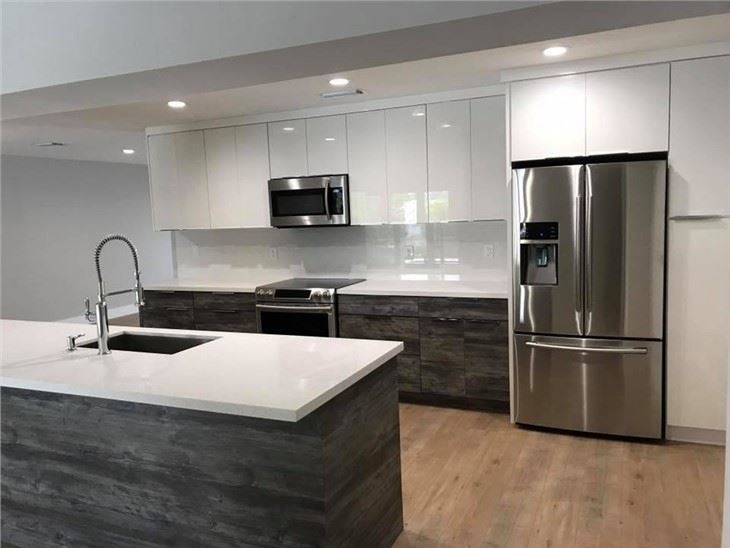
(1)Use pocket hole joinery. Using pocket hole joinery firmly secures both pieces of cabinetry without putting too much pressure on the wood.
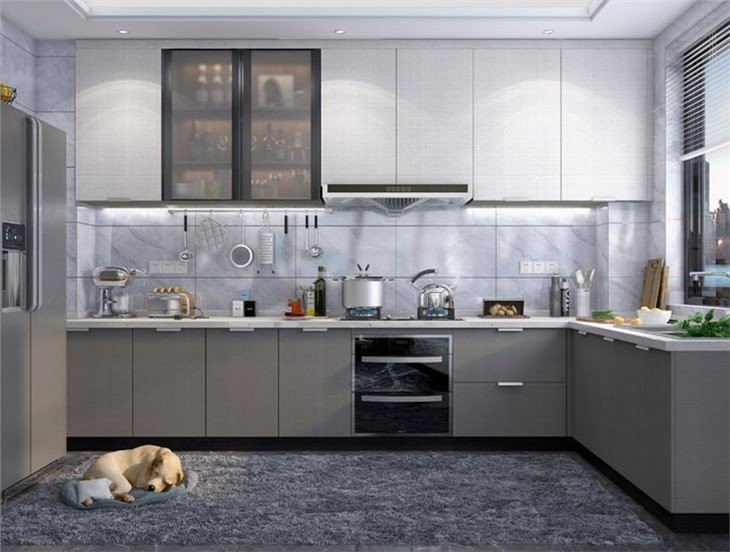
(2)Use PVA glue to attach the face frames to the cabinet box. PVA glue is a strong, durable wood glue that eradicates any need to patch up screw holes on the exterior.
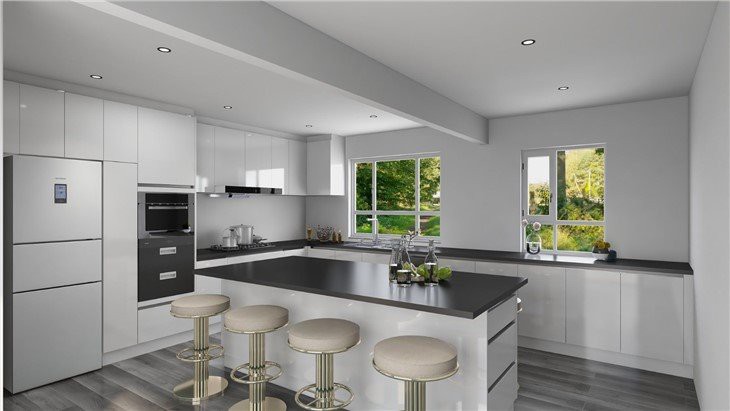
(3)Keep at least five to 10 wood clamps on hand per cabinet box. Not only do wood clamps help secure face frames to cabinet boxes while the glue dries, but they serve as a second set of hands along the perimeter of the cabinet box, smoothing gaps along the frame while everything is installed.
(4)Use a belt sander to sand the face frame after attaching it to the cabinet box. This way you’ll be sure the face frame is completely level with the box and smooth out any marks from installation. If you sand the face frame before it’s attached, the frame might get blemished, and it will be hard to smooth later.
Determine the Type of Stains
Follow these tips for removing specific stains from your wood cabinets:
Clean Inside Kitchen Cabinets
Follow these tips for cleaning inside the kitchen cabinets so that your whole cabinetry looks brand new: